
Can Pilates build muscle?
Many people assume that muscles only grow from lifting heavy weights in the gym. But muscle growth doesn’t come from barbells and dumbbells alone. Your muscles grow stronger whenever they work against resistance.
That resistance can come from many forms of training – including Pilates.
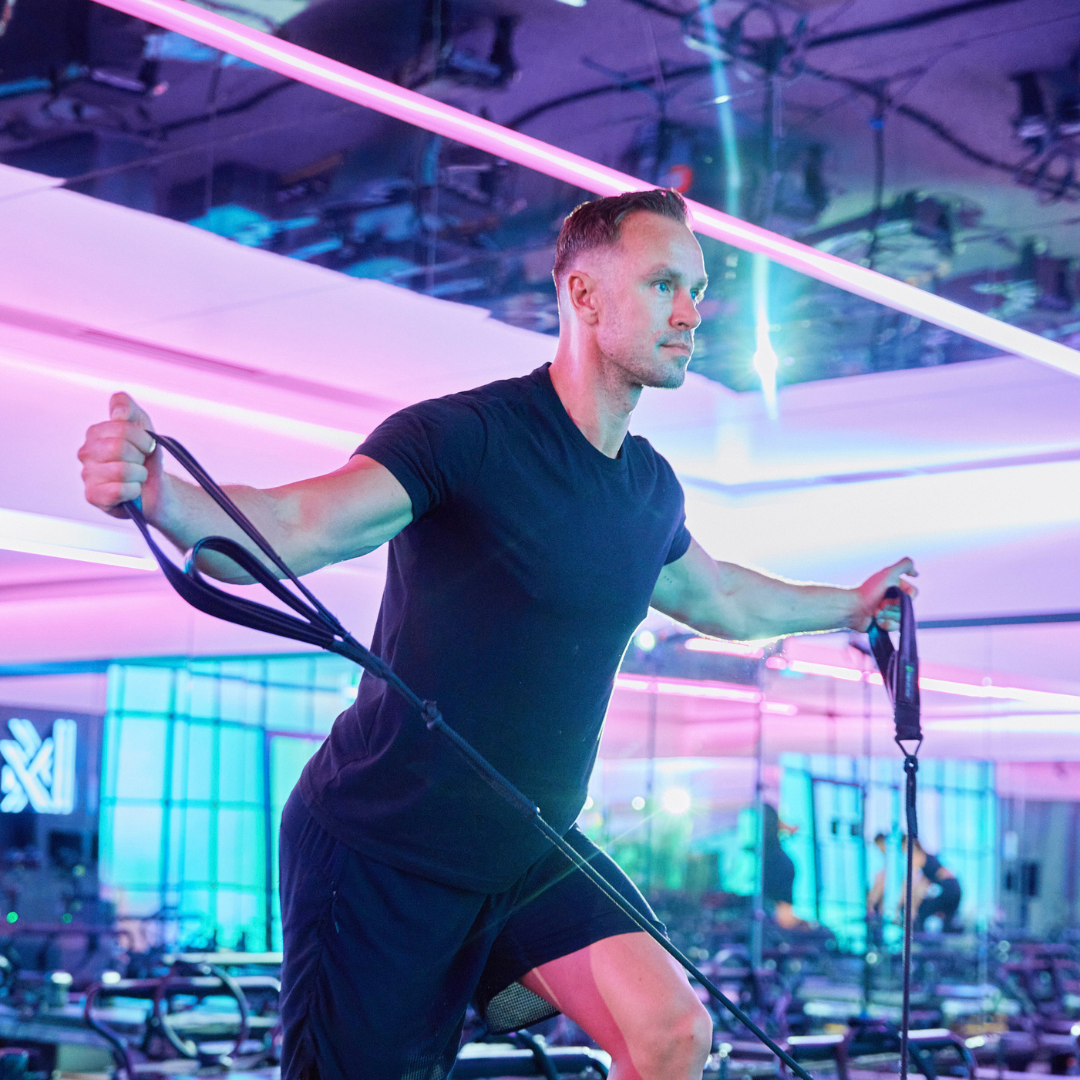
At VAURA, our workouts use the resistance of the reformer springs to challenge your muscles. As you push the carriage, pull the straps, and control each movement, your muscles stay engaged. This creates time under tension that builds stability, control – and strength.
In this guide, we’ll cover the science behind how muscles grow, and explore what role Pilates can play in muscle-building. We’ll dive deeper into the types of strength development reformer Pilates at VAURA can support, bust some myths – such as “Does Pilates bulk you up?”, and explore how our brand of high-intensity Pilates can build your muscle endurance.
How muscles grow: a simple explanation
Your muscles grow when they are challenged.
When a muscle has to work harder than it is used to, it experiences strain. This tells your body that the muscle needs to adapt.
If you lift something heavier than you normally would, for example, your muscles must produce more force to move it.
After the effort, your body repairs and strengthens the muscle fibers so they can handle that challenge more easily next time. As this cycle repeats, the muscle gradually becomes stronger and better able to handle resistance1.
Does Pilates build muscle?
Yes, you can build muscle with Pilates2.
Pilates builds muscle by placing your body under controlled resistance. Pilates exercises use a combination of body weight, spring resistance on the reformer, and slow, controlled movement to keep your muscles working throughout each exercise.
In our workouts at VAURA, those muscles are under tension from the moment the exercise starts, you’re controlling the reformer, keeping your body steady, and guiding every movement. That constant tension is what forces those muscles to get stronger.
What muscles does Pilates work?
Pilates is a versatile style of exercise: it can support weight loss, improve your posture, and even help relieve lower back pain3.
At its core, however, Pilates is strength work. Each movement requires control and coordination, activating the wide range of muscles used in Pilates and strengthening your body from head to toe.
Below, we break down the key Pilates muscles you’ll be working at your local VAURA studio.
Core muscles
All Pilates movement begins with the core. Whether you’re working the mat or the reformer, these muscles stay switched on to stabilize your body and guide each movement.
Pilates for core strength builds your:
- Transverse abdominis – This deep abdominal muscle acts like a natural support belt for your spine, keeping your torso stable while your arms or legs move.
- Obliques – These muscles guide twisting and side-to-side movement, helping you control rotation and maintain balance.
- Deep stabilizers – These smaller Pilates muscles support the spine and pelvis, staying active so you can move with control and maintain good posture.
Glutes and hips
Your glutes and hips power many of the leg movements in Pilates. During a Pilates glute exercise, you’ll press through the feet, lift a leg, or extend the hips to drive the movement and support the lower back.
The glute muscles used in Pilates include:
- Gluteus maximus – This large glute muscle pushes the hips forward and powers strong leg movements. Exercises like reformer footwork and bridges strengthen it as you press through the legs.
- Gluteus medius – This muscle works along the side of the hips. It stops the pelvis from dropping when one leg lifts or moves, helping you stay balanced.
- Hip flexors – These muscles lift the legs toward the torso. Movements like leg lifts and tabletop positions strengthen them as you raise and lower your legs.
Back and postural muscles
Pilates also trains the muscles that help you stand taller and move with better posture. These Pilates muscles support your spine and keep your shoulders stable during movement.
They include:
- Spinal extensors – These muscles run along your spine and help you stay upright. Extension movements strengthen them and counter the rounded posture many people develop from sitting or spending long hours behind a desk.
- Scapular stabilizers – These muscles control the position of your shoulder blades, keeping the shoulders aligned and stable as your arms move.
Arms and shoulders
Pilates can also build strong upper-body muscles. On the reformer especially, your arms guide resistance from the springs, pulling and pressing while the rest of your body stays engaged.
This works the following Pilates muscles:
- Deltoids – These shoulder muscles lift and control your arms. Pilates strengthens them through pushing, pulling, and overhead movements.
- Triceps – The triceps extend your arms and support pressing movements. Pilates builds them when you press through your hands or support your body weight.
- Rotator cuff stabilizers – These small muscles keep the shoulder joint stable. Pilates challenges them through controlled movements that build strength and improve arm control.
Will Pilates bulk you up?
No – Pilates won’t bulk you up.
Bulky muscle develops when people train with very heavy weights1. Pilates challenges muscles differently, using moderate resistance and slower movement to keep them working for longer. This builds lean muscle – meaning that the muscles used in Pilates become stronger and more toned without a large increase in size.
That’s the difference between Pilates and the gym. At the gym, you’re usually trying to lift heavier weight for reps. In our workouts, we’re always reminding people to slow down and focus on their form – because that’s how you tone the muscle.”
How VAURA builds strength and endurance through high-intensity Pilates
At VAURA, we fuse traditional reformer Pilates with the power of athletic training to create workouts that challenge every muscle group. Each workout is designed to help you build muscle with Pilates by keeping your body under resistance from start to finish.
We offer three class styles:
- Total – A full-body strength workout. Spring resistance and controlled tempo keep your body working through each movement, building strength and definition.
- Jumpboards – These high-energy classes combine cardio and strength. Jumping against spring resistance, you’ll challenge your legs, glutes, and core, all while getting your heart rate up.
- Stretch – A recovery-focused class that improves mobility and lengthens tight Pilates muscles, helping your body rebuild strength between workouts.
Want to experience this training style for yourself? Find a VAURA studio near you today. Or, now you know you can build muscle with Pilates, find out how often you should train each week to see results.
1 https://www.carolinescircuits.com/blog/2025/04/07/the-science-of-muscles-and-muscle-building-unders…