
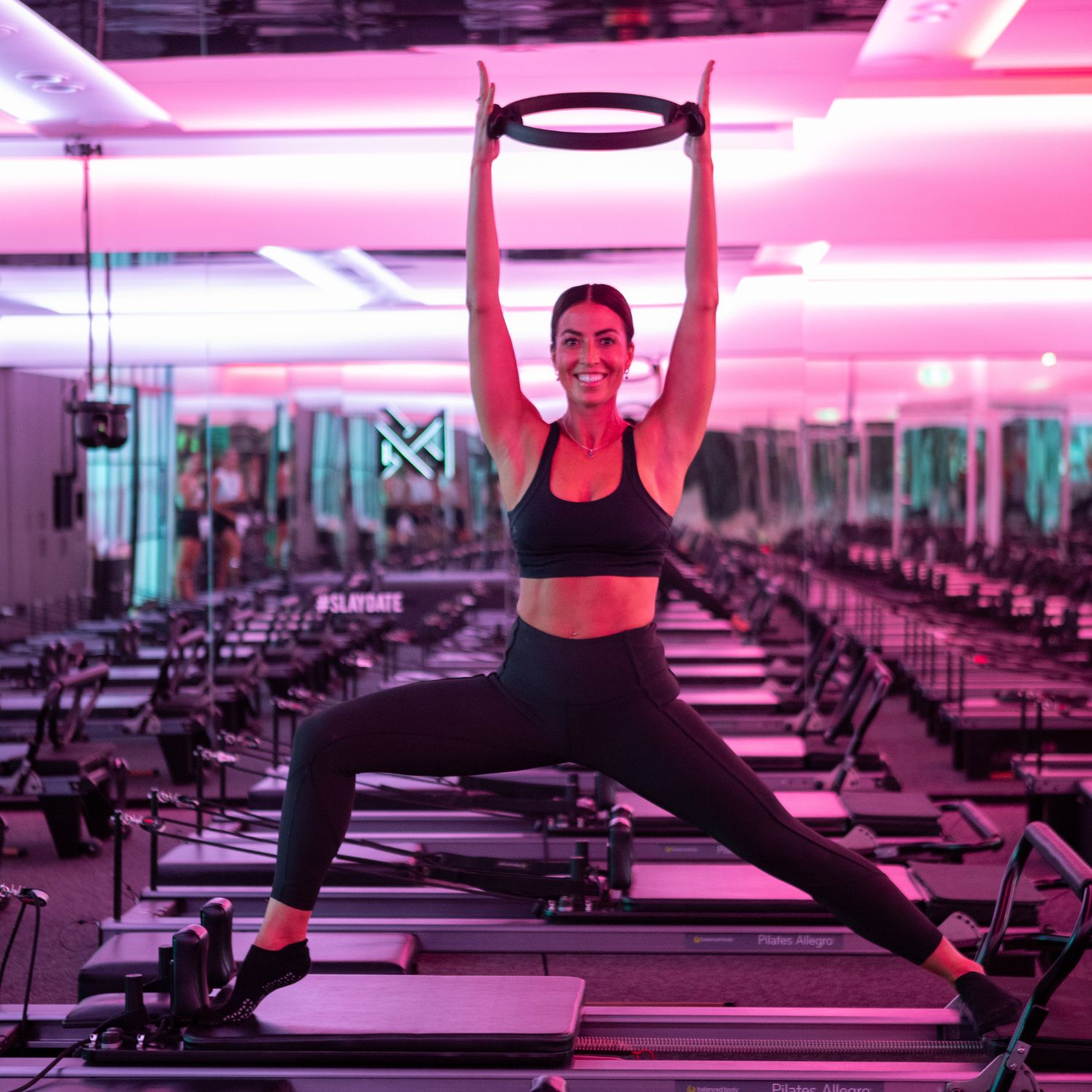
Is Pilates strength or cardio?
It’s a fair question. Many people assume Pilates is a gentle workout that, like yoga, focuses on stretching and light core exercises. Some people see Pilates’ ability to build muscle as more like strength training, while others categorize its high-intensity movements as cardio.
But step into a reformer class here at VAURA, and you’ll quickly realize that Pilates defies categorization – and the buzz you get from it doesn’t fit neatly into a box.
The world of Pilates is incredibly versatile. From slow, controlled movements that build deep muscular strength to dynamic sequences that elevate your heart rate, Pilates can challenge your strength, endurance, and control – all at once.
In this guide, we’ll break down what counts as cardio, what qualifies as strength training, and where Pilates fits between the two. We’ll answer whether Pilates is cardio, strength, or a combination of both – and explore how our workouts at VAURA bring the two together.
What counts as cardio exercise?
Cardio exercise – also known as aerobic exercise – is any movement that raises your heart rate and keeps it elevated.
Many people associate cardio with running or cycling. These activities are examples of steady-state cardio, where you maintain a consistent pace for an extended period. Another approach is interval cardio, which alternates short bursts of higher effort with periods of lower intensity or rest.
Some styles of Pilates – particularly higher-intensity reformer or mat classes – incorporate this interval-style cardio, elevating your heart rate while you move through dynamic sequences.
As you perform more cardio exercise, your cardiovascular endurance improves, helping your heart and lungs deliver oxygen more efficiently throughout the body1.
What qualifies as strength training?
Strength training refers to exercises that place muscles under resistance, causing small amounts of muscle breakdown that rebuild stronger over time.
This resistance can come from many sources. You might use weights, resistance bands, or even your own bodyweight – the key is that you need to be working your muscles against an external force.
So, is Pilates considered strength training?
Pilates absolutely qualifies as strength training! The reformer uses adjustable springs to create resistance, so every time you push the carriage away or control it back, your muscles are working against that tension – just like they would in traditional strength training.
If you’re looking for a workout that builds strength while keeping your body moving, find your closest VAURA studio and book a class with us today.
Is Pilates strength or cardio?
So, is Pilates strength or cardio? Pilates doesn’t sit neatly in one camp.
At its core, Pilates is considered strength training.
Every movement asks your muscles to control resistance – whether that resistance comes from your bodyweight on the mat, or the adjustable springs of a reformer. That resistance builds the deep core strength Pilates is known for.
However, Pilates can also raise your heart rate. When exercises link together with little rest, your body keeps moving continuously and the workout begins to feel far more athletic – meaning that it can also be considered a form of cardio, too.
This is where high-intensity Pilates comes in. Faster transitions and sustained movement push your heart rate higher, allowing the workout to function as both strength training and cardio – a balance that sits at the heart of all our workouts at VAURA.
How VAURA blends strength and cardio in every class
At VAURA, our workouts bring strength and cardio together – combining reformer Pilates precision with dynamic, athletic training.
You’ll see this approach across our class formats:
- Total classes: These sessions combine resistance and continuous movement in one workout. You push and control the reformer carriage against spring tension to build muscle, while flowing between exercises keeps your heart rate elevated.
- Jumpboard classes: Designed to elevate your heart rate while staying gentle on the joints, these sessions turn the reformer into a low-impact cardio workout. Lying on the machine, you press your feet into a padded board and perform controlled jumping movements, while springs absorb your landing.
Answering your questions about Pilates and cardio
Pilates is a diverse form of exercise with many styles and formats. Because of this, people often ask questions like: Is Pilates cardio? Is Pilates aerobic exercise? Is Pilates strength or cardio? Below, we’ll answer some of the most common questions we hear from people when starting out on their Pilates journey.
Is Pilates cardio?
Yes, Pilates can be cardio.
When exercises move quickly and transitions happen with little rest, your heart rate rises much like it would in other cardio workouts. Jumpboard rounds and faster reformer sequences keep your body moving continuously, giving the workout a more athletic feel.
Is Pilates considered strength training?
Yes, Pilates is considered strength training.
Reformer springs create resistance that your muscles must push and control through every movement. Because exercises are slow and controlled, muscles stay under tension for longer, activating deep stabilizing muscles and creating the deep muscle toning Pilates is known for.
Is Pilates aerobic exercise?
Pilates can be aerobic exercise when the class keeps your body moving continuously.
When exercises flow from one movement to the next with little rest, your heart rate rises and your breathing becomes more active.
Is Pilates good cardio for beginners?
Yes, Pilates is good cardio for beginners.
Many reformer classes elevate your heart rate without the intensity or impact of running or jumping. This allows you to build cardiovascular fitness gradually, while learning the ropes.
Plus, because exercises can be easily adjusted on the reformer, Pilates works for a wide range of people – including beginners, those over 50, and anyone training during pregnancy. At VAURA, our trainers can modify movements to support your body at every stage.
Does Pilates burn calories?
Yes, Pilates burns calories!
Reformer workouts challenge muscles through resistance while the body moves continuously, increasing energy use and supporting weight loss as part of a consistent routine. When cardio elements are added – such as faster sequences or jump board work – calorie burn increases even further.
So, is Pilates strength or cardio? Now that you know the answer, explore the power of Pilates and discover our top Pilates exercises for glutes.
1 https://www.heartfoundation.org.au/healthy-living/physical-activity/physical-activity-and-exercise