
If you’ve been online recently, you’ve probably heard the phrase “summer body” more than once. It pushes the idea that your body needs to be “fixed” by a certain deadline – perhaps Memorial Day weekend, or simply when the thermostat hits 70 – and for some, this can be motivating. For others, though, this pressure to look good for summer turns training into a short-term rush, instead of a long-term habit that supports your physical and mental health.
It all sets you up to chase a result – but not maintain the habits that got you there.
That’s why at VAURA, our workouts focus on helping you build something you can maintain, using structured, controlled movement that fits into your routine long-term.
In this guide, we break down what it really means to feel strong, how Pilates supports it, and how to make it part of your routine.
Why strength matters more than aesthetics
Strength gives you control over your body. It influences how you move, how you feel, and how much you can handle throughout your day.
What that means is that when you build muscle endurance, you’re doing more than changing your appearance – you’re optimizing how your body performs. More muscle means everyday movement requires less effort, so your energy lasts longer.
There was a time when strength wasn’t optional. If you couldn’t move quickly, carry what you needed, or throw a spear, daily life was harder – and sometimes riskier.
We don’t live like that anymore, but the principle still applies. The more strength you build, the more your body can handle. And this doesn’t just apply to workouts. Feeling stronger will help everyday tasks feel easier, aid your ability to recover from physical stress, and help you move with greater confidence and ease through the rhythms and routines of life.
The aesthetic result isn’t something you need to chase. It follows naturally when you build a stronger body.
What does it mean to “feel strong”?
Feeling strong goes beyond the size of your muscles. It’s your ability to handle what’s in front of you – physically and mentally – while staying in control of how your body moves and responds2. It doesn’t look one way, but it has a clear feeling. You move with control, and you trust your body to do what you ask of it.
That feeling comes from a combination of factors working together:
- Physical strength – the muscle and endurance behind your movement.
- Stability and control – how well you can support and guide that movement.
- Mind-body connection – your awareness of how your body moves.
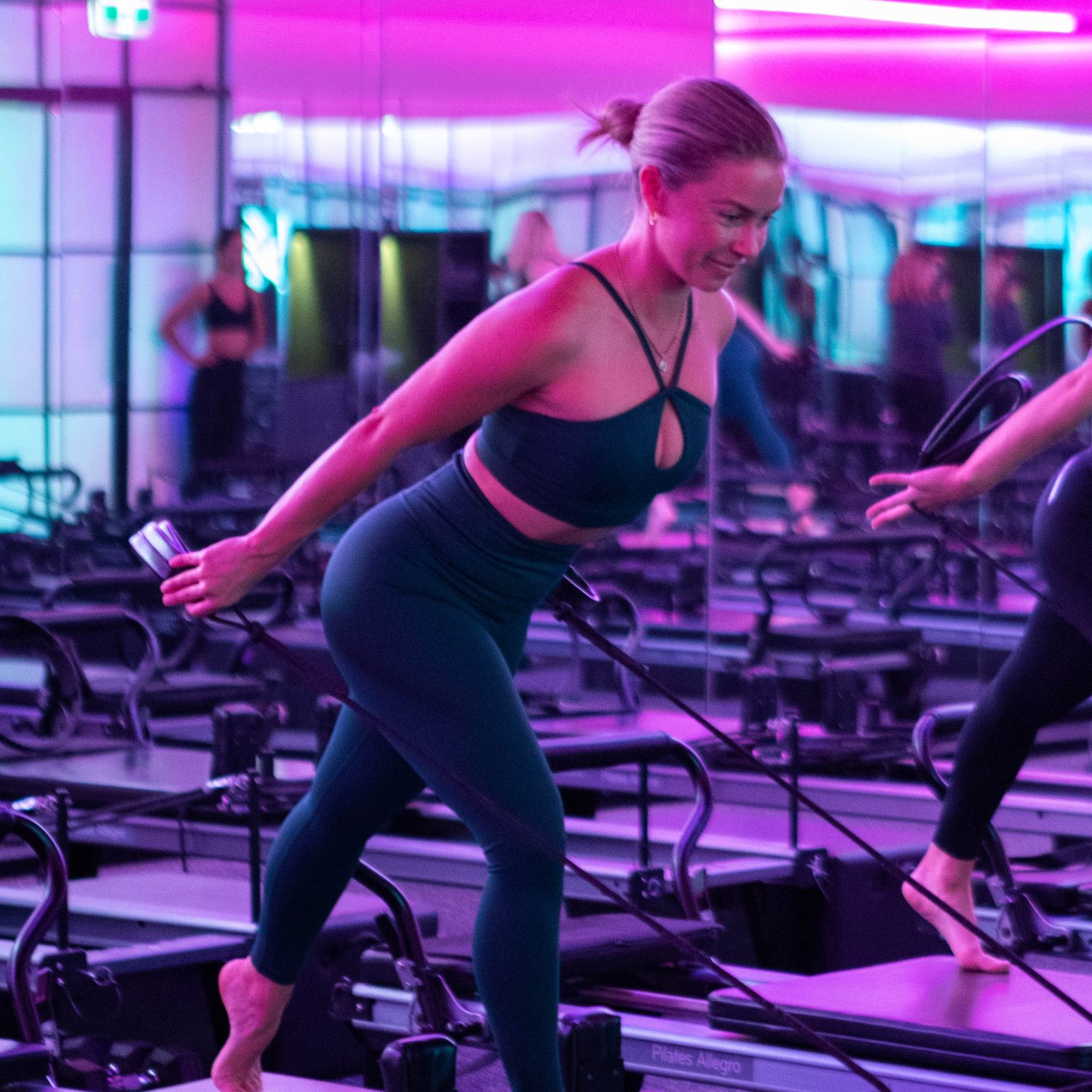
At your local VAURA studio, you’ll build all three attributes through controlled, full-body workouts. Each session builds on traditional Pilates with a high-intensity twist: pushing your body in a heart-pounding, neon-lit environment, with trainers on hand to help you refine your form – and get the most out of each movement and moment.
How Pilates supports strength all year round
Pilates gives you a low-impact way to build strength across your entire body.
While it doesn’t “bulk you up”, per se, Pilates does help you build muscle. By working your deep stabilizing muscles alongside larger muscle groups, VAURA workouts help you build strength through slow and controlled movement3.
Instead of isolating one area, Pilates trains your entire body:
- Core strength – Pilates strengthens your deep core and abs to support your spine and improve control during movement3.
- Lower-body strength – Pilates builds strength through your glutes, hamstrings, and quads to improve power and stability3.
- Upper-body strength – Pilates strengthens your back, shoulders, and arms to improve your posture and daily movement3.
- Endurance – Pilates trains your muscles to keep working for longer without tiring3.
At VAURA, you can work all these elements in different ways, depending on how you want to challenge your body and where you’d like to build strength. For example, Total workouts take you through a sweat-soaked full-body strength session, while our Jumpboard workouts add a cardio element: delivering endurance and muscle tone through controlled lower-body work, while ensuring your core and upper body stay engaged.
5 simple ways to build strength into your routine
Instead of relying on extreme diets or workouts in the lead-up to summer, build habits that make exercise something you enjoy and want to keep doing.
These five simple tips will help you build strength into your routine in a way that lasts.
1. Prioritize consistency
It can be hard to find the motivation to work out, especially when you set unrealistic goals or expectations for yourself.
You won’t always have the perfect session or feel like training every day, and that’s not the point. Strength builds when you repeat movements regularly – because it’s that repetition and practice that allow your muscles to adapt and get stronger4.
If you don’t show up often enough, that process doesn’t happen.
The solution? Set a clear goal (for example, three workouts a week for six weeks) and focus on completing those sessions. When you start tracking whether you showed up, rather than how well you performed, you remove the pressure and make it easier to keep going.
2. Go to group classes
Every extra decision creates friction. What time will I train? What workout should I do? Do I feel like it today?
Group classes remove that back-and-forth. Once you’ve booked in, the decision is made. You’re more likely to follow through because it feels like a commitment, not just an option. (This is also where the benefits of exercising with friends come in – because training alongside others creates a level of accountability that’s hard to replicate on your own.)
At VAURA, you don’t need to plan your workout or think about what’s next. You show up, and our instructors guide you through a structured session from start to finish.
Keen to try it for yourself? Find your nearest VAURA studio and start building strength in a supportive class environment!
3. Slow your movements down
One of our top tips for building strength all year round? Slowing down and focusing on the form of your movements – rather than how many reps you can get through.
Why? Because your strength depends on how long your muscles are working4. This is known as time under tension: the longer a muscle stays engaged, the more demand you place on it, which is what drives it to adapt and get stronger.
Moving with control also helps you target the right muscles. When you rush, it’s easier for other areas to take over, which can lead to injuries and lower back pain.
To help you isolate the correct muscles as you move, our instructors guide your tempo and form throughout each session – showing you how to use Pilates props to increase resistance and maximize the effectiveness of each class.
4. Listen to your body and make time for recovery
Strength isn’t just gained at sessions – it’s built between them.
Each workout creates small amounts of stress in your muscles, which your body needs to recover from before your next workout. These windows are when your body repairs, refuels, and rebuilds your muscles – so that, over time, they’ll be able to handle more4.
All this means rest days aren’t optional – they’re essential. Without them, you end up training on fatigue, which limits how well your body can adapt and slows progress.
If you’re still desperate to move while resting after a big workout, active recovery can help. Our Stretch classes use deep, yoga-inspired positions to improve mobility and flexibility, helping loosen tight muscles so you return to your next session moving freely. This makes it easier to maintain good form and keep building strength.
5. Eat a balanced diet – and don’t neglect the protein
Your body and muscles are a car, and they’ll only go the distance if your body has enough fuel in the tank – which is why a balanced, nutrient-rich diet is vital to feel strong.
Protein plays a key role in building lean muscle, helping your body repair after each session5. You don’t need to overcomplicate it, but you do need to make sure you’re eating enough. Alongside protein, healthy fats – like nuts, seeds, avocado, and eggs – also help support your energy levels, so you can keep smashing your strength and training goals.
Tired of starting over every summer? Find out how many times a week you should do Pilates to see results – all year round!
1 https://pubmed.ncbi.nlm.nih.gov/11665913/
2 https://pubmed.ncbi.nlm.nih.gov/14998709/
3 https://pmc.ncbi.nlm.nih.gov/articles/PMC9681646/