
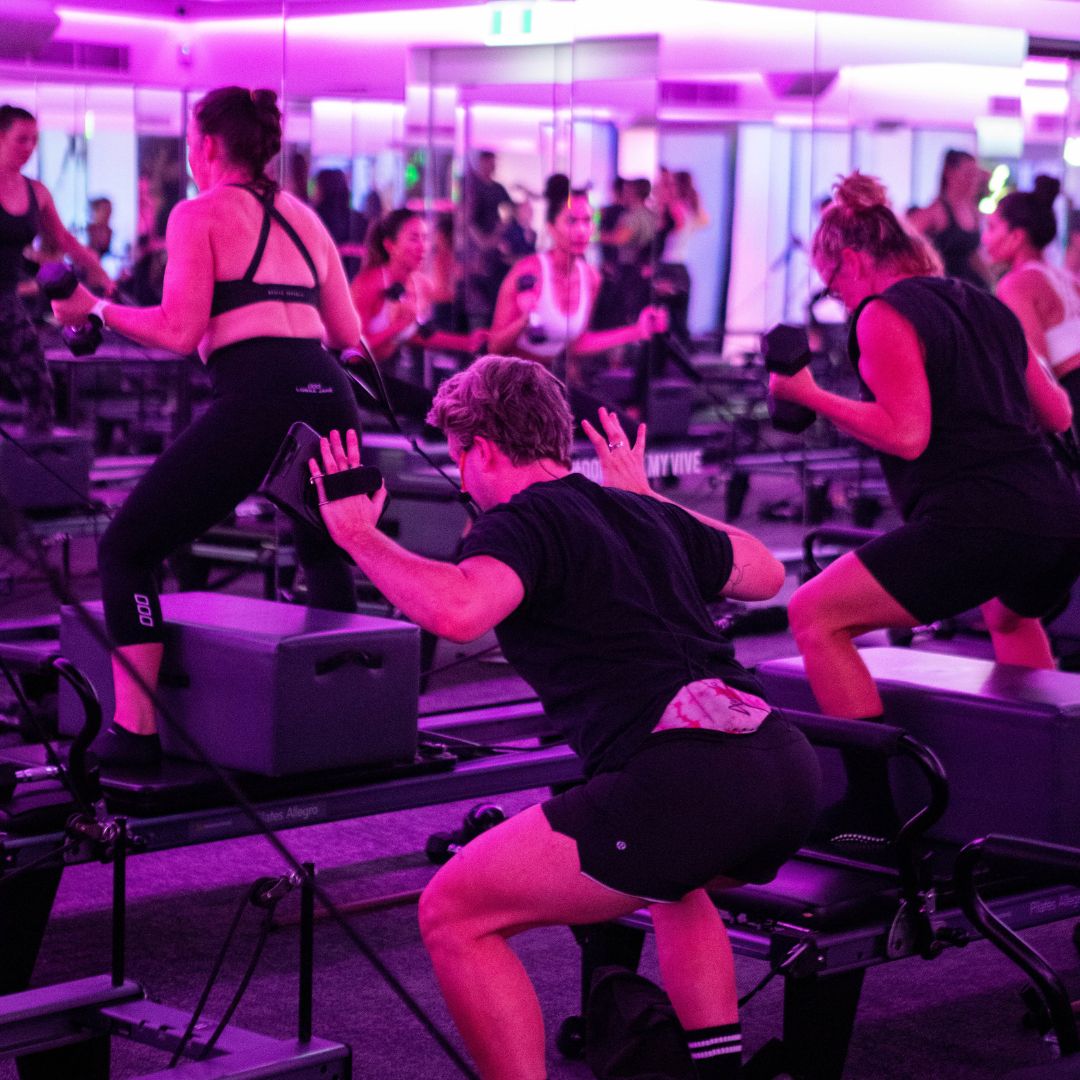
Pilates has come a long way from its traditional reputation for slow, controlled movement. Globally, reformer studios are embracing a faster, more athletic style that’s winning over everyone from gym regulars to total beginners. Its name? Dynamic Pilates.
So, what is dynamic Pilates, exactly?
It keeps the foundations of control, alignment, and breath, but adds a faster pace, fluid transitions, and full-body intensity. At VAURA, our high-intensity reformer classes are a perfect example – blending strength, rhythm, and flow in every session.
Read on to discover what dynamic Pilates is, how it compares to traditional Pilates, why it can benefit you, and all the ways it’ll show up in your next VAURA workout.
What is dynamic Pilates?
Dynamic Pilates is a faster, more athletic style of Pilates. Classes move at a quicker tempo, with heavier spring resistance and exercises that link together in continuous flows, leaving little time to pause between movements.
The core principles Joseph Pilates developed – including strength, control, and precision – stay firmly in place. What changes is the intensity: you can expect a workout that feels more layered, more demanding, and a whole lot sweatier than slower-paced styles.
Want to try dynamic Pilates for yourself? Find your local VAURA studio to start a trial!
How is dynamic Pilates different from traditional Pilates?
Traditional Pilates often centers on mastering individual exercises, with time taken to set up, perfect technique, and reset between each one.
Dynamic Pilates builds those same exercises into flowing sequences, so the class plays out more like a structured workout than a series of separate moves.
What are the benefits of dynamic Pilates?
Dynamic Pilates is ideal if you’re looking for something that will improve your strength and cardio at the same time.
Read on to learn more about what dynamic Pilates is and the benefits it offers.
1. Builds strength and endurance
Spring resistance and continuous movement make a powerful combination for building muscular strength and endurance. With little time to rest, your muscles stay under tension for longer, and eventually they start to tremble – and those famous Pilates shakes are a sign your muscles are working close to fatigue! Our VAURA Strength workouts are built around intentional sets, slow and controlled tempos, and progressively heavier spring loads, bringing muscles to fatigue so they can adapt and grow stronger.
2. Improves core control
Your core works in almost every dynamic Pilates exercise, targeting the deep stabilizing muscles tucked beneath your abs. Think of them as your body’s internal support system, keeping you steady as you twist, reach, and balance. With the carriage always moving, they rarely get a break, building functional core strength that carries into everyday life.
3. Creates a full-body workout
Dynamic Pilates classes often combine movements, meaning you’re working several muscle groups at once. During leg exercises, for example, you might add biceps curls or hold a plank on the carriage while drawing your knees towards your chest. By pairing movements this way, you can get more out of a single class.
4. Boosts energy and workout intensity
Struggling to feel motivated to exercise? The continuous, fast-paced flow of a dynamic Pilates class lifts your heart rate and leaves you buzzing.
At VAURA, we turn that feeling up a notch with neon-lit rooms and music-driven classes, so you’re always moving with the beat.
5. Improves balance and control
Whether you’re lunging with one foot on the carriage or kneeling through an arm series, your body makes constant small adjustments to stay balanced. Much like holding a pose in yoga, dynamic Pilates trains your awareness of where your body is in space, helping you move with more control.
Offers a low-impact challenge
If you’re looking for a more intense workout, dynamic Pilates ticks the boxes – even without the pounding of high-impact moves like running or box jumps.
That makes it a great option if you’re returning from injury, practicing Pilates during pregnancy… or simply aren’t a huge fan of running! If this sounds like you, try our Jumpboard workouts: you lie on the reformer and bounce off a padded board, which gets your heart rate up and builds a real burn in your legs while remaining gentle on your joints.
Is dynamic Pilates the same as high-intensity Pilates?
Dynamic and high-intensity Pilates are close cousins, though not identical – as each term describes something slightly different:
- Dynamic Pilates refers to the movement style: flowing, controlled, energetic, and progressive.
- High-intensity Pilates (sometimes called HIIT Pilates) refers to the workout demand: challenging, sustained, and designed to build strength and endurance.
In other words, one describes how you move; the other describes how hard you work.
At VAURA, our workouts combine high-intensity and dynamic Pilates in a single session. Expect continuous flows on the reformer, springs set to challenge you, and athletic sequences that keep your muscles engaged from warm-up to cool-down, with options to scale up or down depending on how you’re feeling on the day.
Is dynamic Pilates suitable for beginners?
Yes, dynamic Pilates is a great place for beginners to start.
The reformer machine and Pilates props may look complex, but they’re designed to support you. You can adjust the springs to match your strength, and the carriage, foot bar, and straps help guide each movement, making it easier to find good alignment from the start.
Expect a bit of a wobble (and maybe a shake or two) in your first class. That’s all part of the fun! Our instructors will guide you through setup, spring changes, technique, and modifications, so you’re never left guessing.
Take your time, focus on form, and watch your confidence grow with every class!
Thinking of going to your first dynamic Pilates class? Next, learn how to avoid the 10 most common mistakes beginners make.