
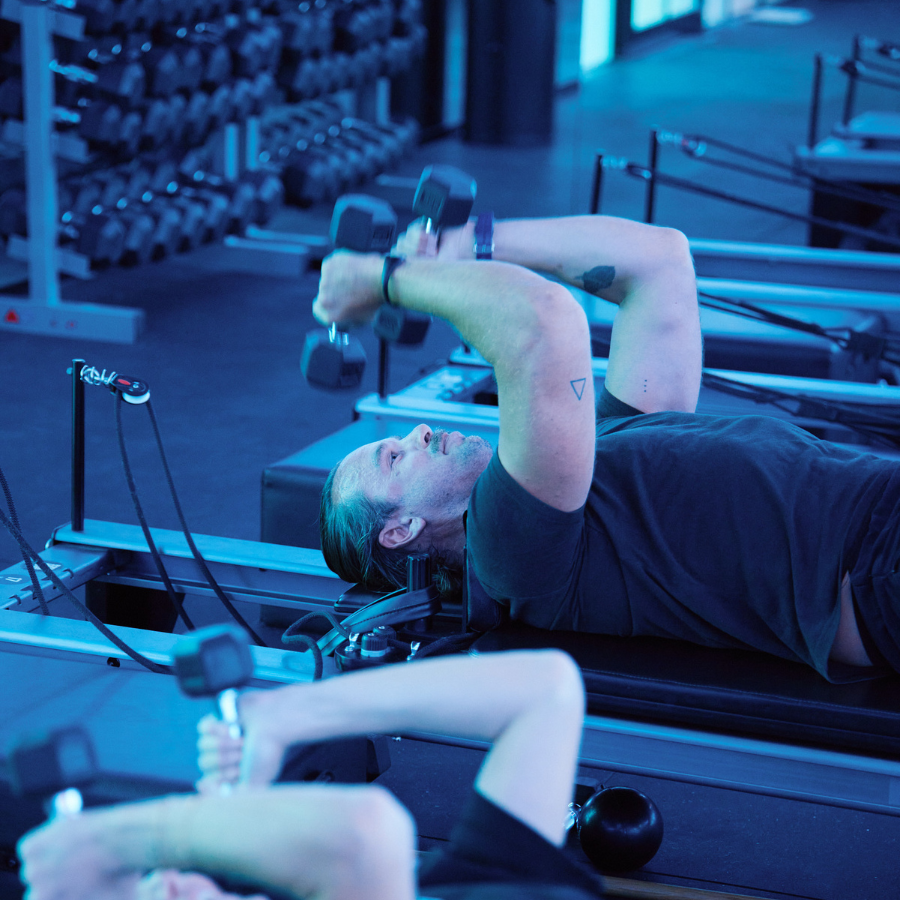
You finish your VAURA workout, and you feel great. But the next morning – getting out of bed, walking down the stairs, or sitting down to eat breakfast – you’re reminded of just how challenging the session really is.
If you’re feeling sore after Pilates, it’s a common experience, especially when you’re new to the practice or have challenged yourself in a particularly demanding session. This is often down to delayed onset muscle soreness (DOMS) after Pilates – which can develop when your muscles are working longer, harder, or differently than they’re used to.
But soreness isn’t the goal, and you don’t need aching muscles to know you’ve had an effective workout. Sharp, severe or persistent pain is also something you shouldn’t ignore.
So, what’s actually happening to your muscles during a VAURA class? Let’s explore why you might feel sore afterward, which muscles are doing the work, and how to recover faster.
Is it normal to feel sore after Pilates?
Absolutely! Some tenderness, stiffness, or muscle pain after Pilates is completely normal, particularly if you’re:
- New to Pilates or returning after a break
- Increasing the intensity or spring resistance
- Trying unfamiliar exercises or exploring a greater range of motion
- Spending more time controlling the lowering phase of movements
For example, VAURA STRENGTH classes focus on targeted muscle groups, progressive resistance and controlled tempos. If you’re trying this format for the first time, or increasing your resistance, you might notice more post-class tenderness than usual.
As we touched on above, this can be a result of DOMS. Unlike the fatigue you might feel during class, DOMS – as the name suggests – tends to creep up on you later. It can begin several hours after your session, but will become more noticeable over the next 24 to 72 hours, before gradually easing up over the following days.
And if you wake up feeling perfectly fine? That’s normal, too! You don’t need to feel sore to make progress. As your body adapts to regular Pilates, you may find that post-class aches become less frequent or intense.
For more guidance around what we mean by “regular Pilates” – and how that might look for you – explore our take on how many times a week you should do Pilates.
Where you might feel sore after Pilates
From your abs to your calves, Pilates can challenge your entire body. Exactly where your body aches after Pilates will depend on the exercises you performed, the resistance used, and what your body is generally accustomed to – so let’s dig deeper into which muscles might be feeling it most, and why.
Core hurts after Pilates? Here’s why
You don’t have to spend an entire class doing crunches to feel it in your abs the next day!
Your core plays a role in almost every reformer Pilates exercise: helping you maintain balance, support your posture and spine, and keep your pelvis stable as you move.
Take VAURA’s signature TOTAL class, for example. It combines strength, endurance and stretching in one full-body session, with your core helping you stay balanced and controlled throughout. So, if your abs hurt after Pilates, it may be from more than just the dedicated ab exercises – although they definitely play a part!
To learn more about what Pilates does for your core, our dedicated article will help.
Legs sore after Pilates? There’s a reason
Feeling it in your thighs, glutes, or calves? Exercises like lunges, bridges, footwork and Scooter-style movements can all contribute to DOMS after Pilates.
VAURA’s JUMPBOARDS classes introduce another dimension, combining controlled jumping sequences with reformer resistance in a dynamic routine. If you’re new to this style of training, you might notice soreness in your quads, hamstrings, inner thighs or glutes (an area Pilates is particularly effective at building strength in) – especially if you’ve increased the difficulty or introduced new exercises into your workout routine.
Sore arms, shoulders or upper body after Pilates? Dive deeper
If your arms feel surprisingly heavy the next day, you’re not alone. Pilates offers plenty of opportunities to strengthen your upper body, too. From pulling the reformer straps to holding a plank, exercises can target your shoulders, chest, arms, and upper back.
At VAURA, we also incorporate Pilates props and equipment – including dumbbells, resistance bands, weighted balls and ankle weights – to add variety and an extra challenge to your sessions. If you’re not used to these exercises or the added load of this equipment, you might notice a little extra muscle soreness after Pilates.
If you’re ready to get moving again (but your sore arms mean you don’t feel like jumping straight into another demanding strength session), consider VAURA STRETCH. Combining Pilates and yoga-inspired movements, these classes focus on flexibility, mobility and control – a different way to challenge yourself and relieve stress as you ease back into your routine.
Back sore after Pilates? Find out more
Mild muscular soreness in your back can happen after Pilates, particularly if you’ve been practicing unfamiliar movements or strengthening areas that aren’t usually challenged in your routine. However, there’s an important difference between general muscular tenderness and pain that could indicate an injury.
Dismissing sharp or sudden pain as normal post-workout soreness is one of the most common Pilates mistakes people can make. If something doesn’t feel right – be it discomfort that radiates into your arms or legs, numbness, tingling, or pain that continues to get worse after a workout – stop the activity and seek advice from your doctor. The same applies if pain significantly limits your movement or isn’t improving as expected.
Soreness vs pain after Pilates: what’s the difference?
There’s a difference between feeling a little tender after a challenging class and experiencing pain that could signal an injury. Knowing what to look out for can help you decide when to keep moving and when to give your body more attention.
Typical DOMS after Pilates tends to:
- Develop gradually in the hours following your session
- Feel like a dull ache, tenderness, or stiffness in the muscles you exercise
- Become more noticeable when you move or press on the affected area
- Ease progressively over the following days
Pain that deserves more caution may:
- Start suddenly during an exercise
- Feel sharp, severe, or localized around a joint
- Be accompanied by significant swelling, numbness, or tingling
- Make everyday movements difficult
- Get progressively worse or last longer than expected
All that said, it’s important to remember that these aren’t hard-and-fast rules – and you don’t need to identify exactly what’s causing your discomfort yourself. If you’re unsure, it’s always worth speaking with a healthcare professional rather than pushing through. The same goes in a VAURA class – and you should always let your instructor know when a movement feels uncomfortable, or if you’re struggling to maintain control. They can help you adjust the exercise or resistance, rather than pushing through. If you’re experiencing sharp or unusual pain, however, stop and seek appropriate medical advice.
We’ve established that Pilates can cause some stiffness and soreness after a workout – but what is it doing for those muscles? Find out more with our guide to how Pilates builds muscle – and whether Pilates counts as strength, cardio, or both.
Or, if you’re ready to put what you’ve learned into practice, explore our VAURA workouts and find a class that suits your experience and fitness goals.